Vacuum Types and Pet Stress: Upright, Canister, Stick, Robot
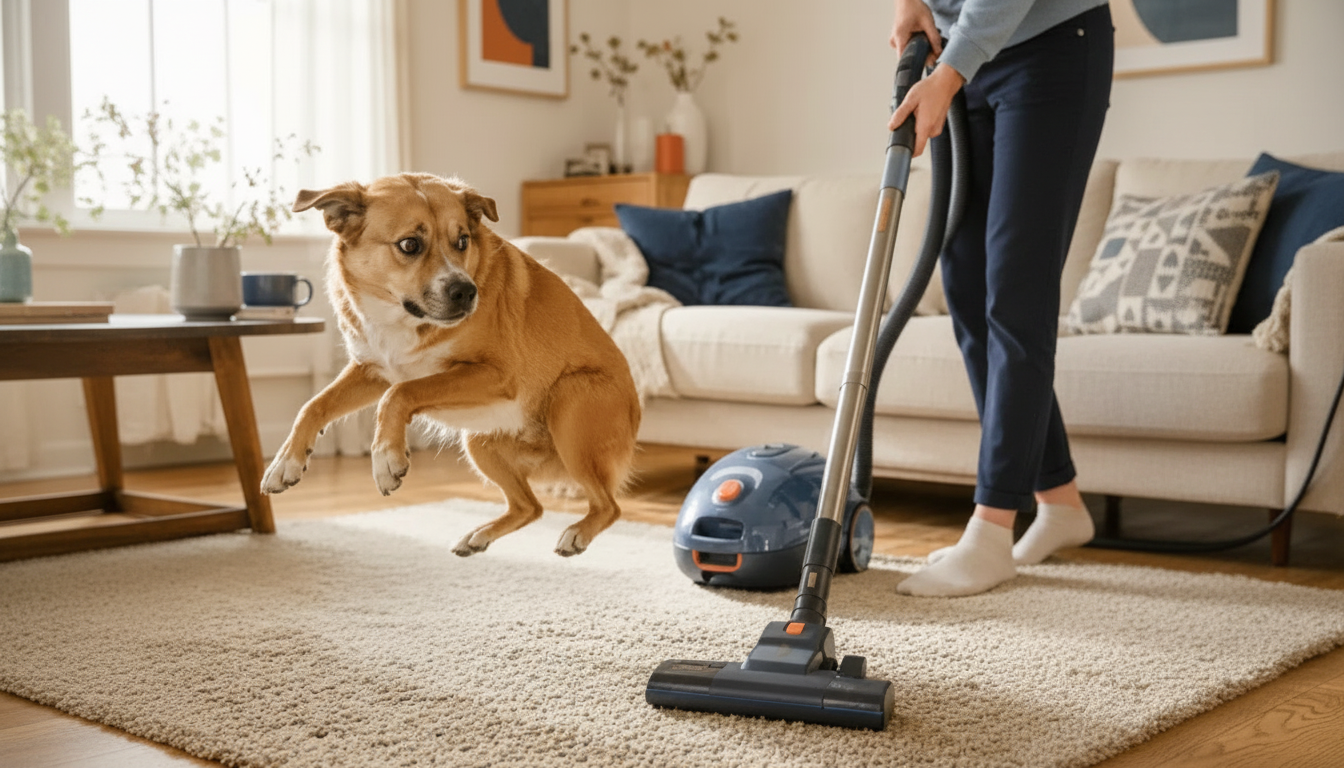
Does vacuum type (upright, canister, stick, robot) affect pet stress levels?
Yes. Vacuum type can change how stressful cleaning feels to pets because different designs produce different noise levels, movement patterns, and “approach” behavior. Many pets react less to predictable, quieter machines and more to loud motors, sudden direction changes, and devices that roll directly toward them.
Upright vacuums
Uprights often have stronger airflow and louder motors, plus a tall shape that moves in broad, fast passes. That combination can feel intense to sound-sensitive pets, especially when the head bumps furniture or the brushroll changes pitch on rugs. If a pet already startles easily, an upright may be the most stressful style during close-quarters cleaning.
Canister vacuums
Canisters can be less visually threatening at the wand, but the canister body may follow unpredictably, bumping along behind. Some pets fixate on the trailing hose or the rolling unit, which can raise arousal and avoidance. Noise varies widely by model, so a quieter canister can be a calmer option than an upright.
Stick vacuums
Stick vacuums are typically lighter and easier to control with smoother, slower movements. Many are quieter than full-size uprights, and the smaller footprint can reduce the “looming” effect. However, high-pitched motor whine on certain cordless models can still bother pets with sensitive hearing.
Robot vacuums
Robot vacuums often cause stress in a different way: they move on their own, change direction abruptly, and may corner a pet. Some animals habituate quickly; others remain wary because the robot approaches at floor level and can appear unpredictable. Scheduling runs when pets are in another room and using boundary strips or no-go zones can help.
For a deeper breakdown of noise, movement, and practical ways to reduce anxiety during cleaning, see the main guide: https://freshesttrendfortune.shop/does-vacuum-type-upright-canister-stick-robot-affect-pet-stress-levels/.
FAQ
How can I help my pet stay calm while vacuuming?
Create distance (another room with a door closed), add a steady sound buffer (fan or music), and reward calm behavior with treats or a favorite toy after each short vacuum session. Keeping movements slow and consistent and vacuuming on a predictable schedule can also reduce anticipation stress over time.










Leave a comment