Pets vs. Vacuums: Why the Noise and Motion Scare Them
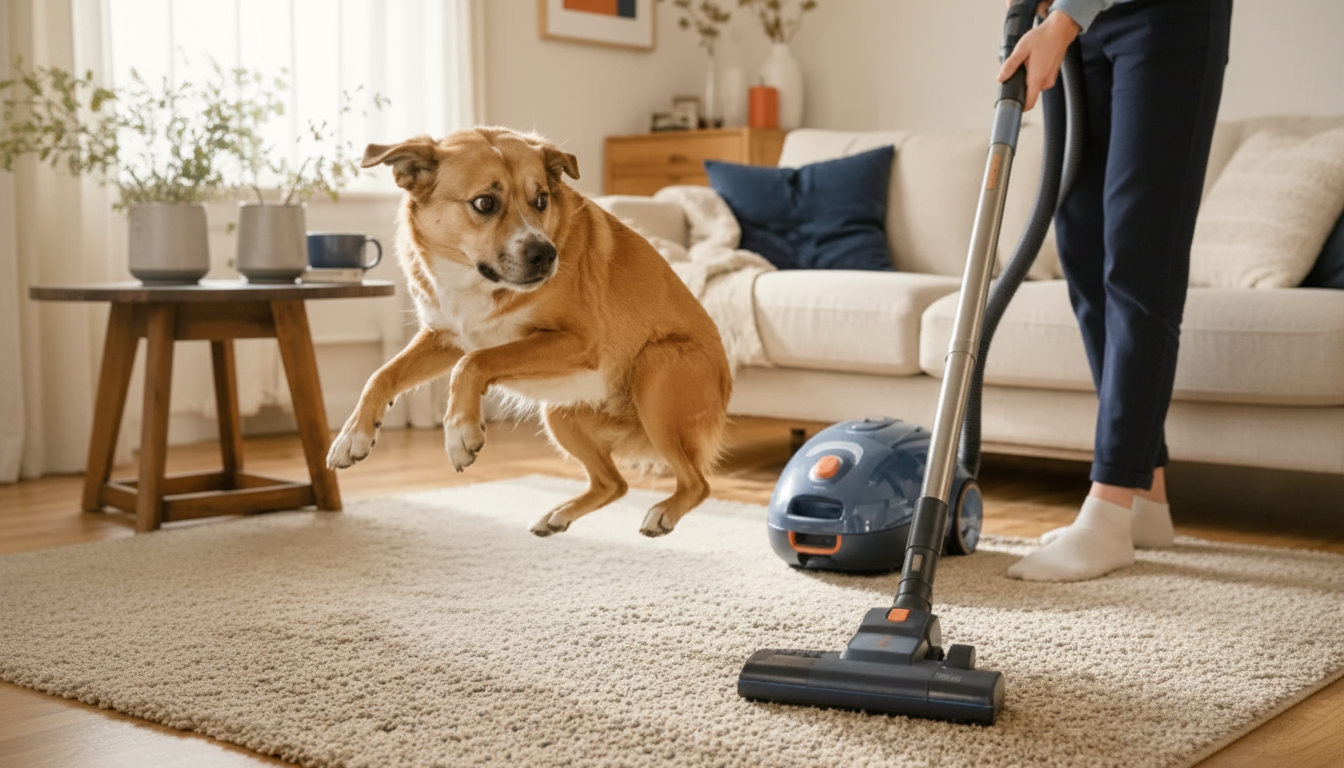
Why are some pets afraid of vacuum cleaners?
For many pets, a vacuum cleaner isn’t just “a loud appliance.” It’s a fast-moving, unpredictable object that roars, vibrates, and invades their space without warning. That combination can trigger a strong fear response, especially in animals that are naturally sound-sensitive or cautious around unfamiliar movement.
1) The noise hits sensitive hearing
Dogs and cats hear a wider range of frequencies than humans and often perceive household sounds as much more intense. Vacuums can produce sudden spikes in volume, high-pitched tones, and a constant drone—an overload that can feel threatening. Some pets also associate the noise with past stress, like being chased away from a room or startled while resting.
2) Unpredictable movement feels like a threat
Vacuums roll, pivot, and change direction quickly. To a pet, that can resemble something that’s “hunting” or advancing. Hoses and attachments can look like grasping objects, and the vacuum’s size relative to a small dog or cat makes it even more intimidating.
3) Vibration, airflow, and scent add to the alarm
The rumble through the floor can be unsettling, especially for pets that are sensitive to vibrations. Airflow from the vacuum can blow fur or whiskers, and the machine may kick up smells of dust, pet hair, or cleaning products—all of which can intensify a pet’s stress.
4) Learned fear from negative experiences
If a pet has been cornered by a vacuum, scolded near it, or repeatedly forced to stay close while it runs, fear can become a learned response. Even one startling incident can create a lasting association.
For a deeper look at common triggers and practical ways to reduce stress during cleaning, visit the main article on why some pets are afraid of vacuum cleaners.
FAQ
How can I help my pet get used to the vacuum cleaner?
Start with the vacuum turned off and reward calm behavior at a comfortable distance, then gradually decrease distance over multiple sessions. Later, briefly turn it on in another room while offering treats or a favorite activity, keeping sessions short and ending before your pet panics.











Leave a comment