Toddler Nightmares: Calm Comfort Steps That Work
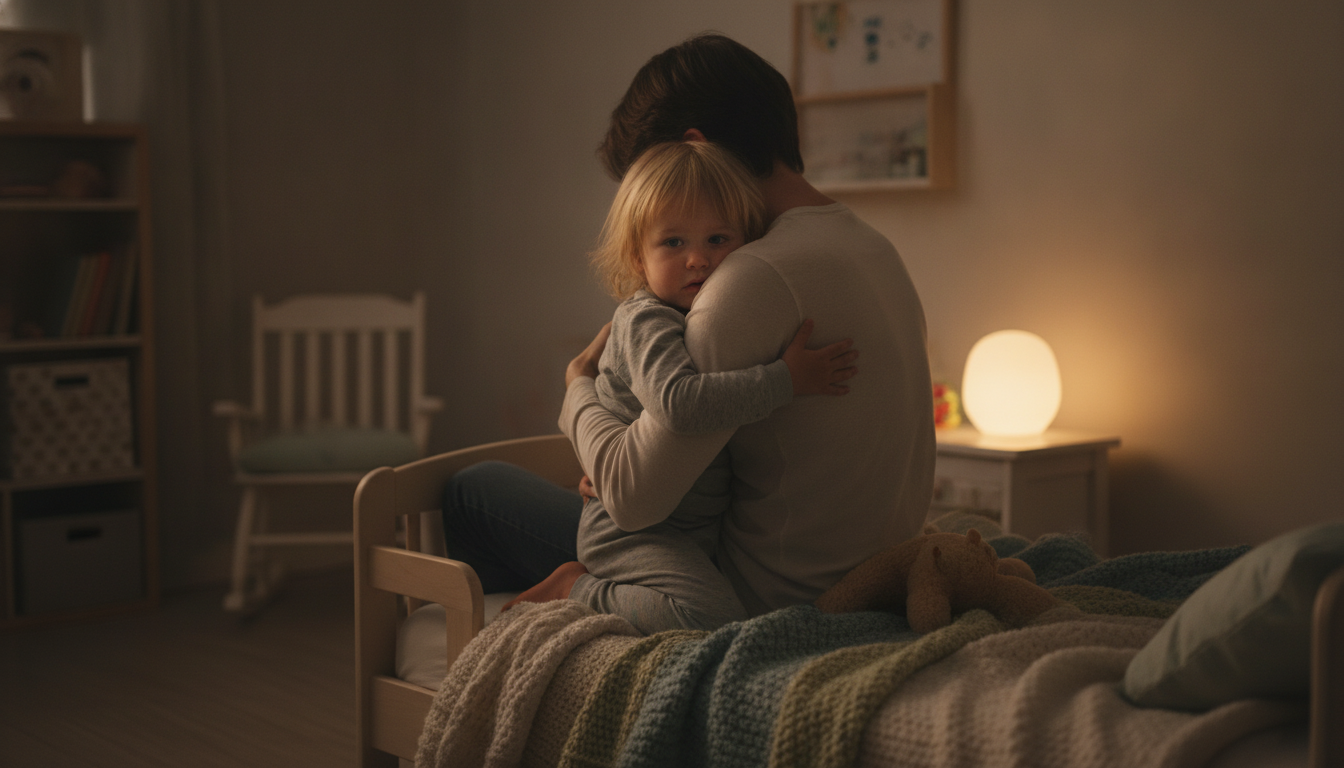
Nightmares can turn a peaceful night into repeated wake-ups, tears, and bedtime resistance. With toddlers, fear feels immediate and real, even when the dream is over. A steady, predictable response helps the nervous system settle, rebuilds a sense of safety, and reduces the chance of the same pattern repeating night after night.
Nightmares vs. night terrors: why the difference matters
Knowing whether your toddler is having a nightmare or a night terror changes what helps most. Nightmares are usually easier to comfort in the moment; night terrors tend to look dramatic but often pass faster when you keep stimulation low.
| Feature | Nightmares | Night terrors |
|---|---|---|
| When they occur | Often late night / early morning | Often first few hours after bedtime |
| Child’s state | Wakes fully and seeks comfort | Looks awake but is not fully alert |
| Memory next day | May remember parts of dream | Usually no memory |
| Best parent response | Comfort, reassure, help return to sleep | Keep safe, speak softly, avoid shaking or forcing wake-up |
- Nightmares usually happen in the second half of the night; a toddler often wakes fully, seeks comfort, and may describe scary images in simple terms.
- Night terrors often happen earlier in the night; a child may scream, look awake, and be hard to soothe, but typically won’t remember it in the morning.
- If your child can be comforted and wants reassurance, treat it like a nightmare; if they seem confused and inconsolable, keep them safe and wait it out calmly.
What to do in the moment: a simple 5-step soothing routine
A toddler’s brain can’t reason its way out of fear at 2 a.m. The goal is to send a clear “safe signal” through your voice, body language, and repeatable steps.
- Pause and regulate first. Approach slowly, soften your voice, and keep lights dim. Your calm presence works faster than explanations.
- Reassure with short phrases. Try: “You’re safe. I’m here. It was a scary dream.” Skip detailed questions while they’re crying.
- Offer grounding. A sip of water, a gentle hand on their back, three slow breaths together, or naming familiar objects (“Bear is here. Your blanket is here.”) helps bring them back to the room.
- Reset the scene once. If they ask, do one quick check (closet/under bed), then stop. Repeated “monster checks” can accidentally train the brain to keep scanning for danger.
- Return to sleep with a predictable bridge. Tuck-in, comfort object, a brief cuddle, then the same closing phrase every time (for example: “I’ll see you in the morning. You’re safe.”).
What to say (and what to avoid) after a nightmare
Language can either turn the volume down on fear or unintentionally crank it up. Toddlers do best with validation, simplicity, and small choices.
- Validate first: “That felt really scary” lands better than “It’s not scary.” Validation helps big feelings move through faster.
- Keep it concrete: Use short sentences and simple options such as “Nightlight on or door cracked?”
- Avoid bargaining or threats: Fear isn’t defiance. Pressure often increases bedtime anxiety the next night.
- Skip trigger-analysis in the moment: Don’t dissect shows or events at 2 a.m. Focus on safety now; review patterns during daytime when your child is calm.
Bedtime solutions that reduce nightmares over time
Nightmares are common in early childhood, and many fade with development. Consistent sleep cues and a calmer wind-down can reduce how often your toddler wakes distressed.
- Protect the wind-down hour. A predictable sequence (bath, pajamas, story, cuddle, lights) lowers arousal and makes sleep feel safer.
- Watch overtiredness. Late bedtime and missed naps can lead to more night wakings and vivid dreams for some kids.
- Limit frightening content. “Not that scary” cartoons, games, or older-sibling shows can resurface as dream material at night.
- Practice a daytime “brave plan.” Rehearse what to do after a bad dream: call for you, hug a stuffed animal, take three breaths, then lie down.
- Add comfort cues. A nightlight, white noise, a familiar blanket scent, and a consistent sleep space create reliable “safe signals.”
Daytime tools: helping a toddler feel safer at night
Daytime is when you can build coping skills without the pressure of falling back asleep. Keep it playful and brief.
- Name feelings with play. Draw the “scary dream,” then draw a “helper” (a superhero pet, protector blanket, brave flashlight) that changes the story.
- Try a simple dream rehearsal. Retell the dream with a safe ending (“Then Daddy picked you up and you were safe”), repeating it a few times during the day.
- Create a daily connection point. Ten minutes of child-led play can reduce separation anxiety at bedtime.
- Teach body-calming. Bubble breaths, pinwheel breaths, or slow finger-counting are easy skills toddlers can copy when upset.
When nightmares keep coming back: common causes to check
Comforting resources for parents who want a step-by-step plan
- What to Do When Your Toddler Has Nightmares (ebook) offers guided routines, calming techniques, and practical bedtime solutions designed for toddler attention spans.
- A Guide to Safe Space Mapping can help you think through comfort cues and “safe zones” in a way that supports calmer nights and easier returns to sleep.
When to talk to a pediatrician
For additional background on children’s sleep concerns, review guidance from American Academy of Pediatrics (HealthyChildren.org), the NHS, and the Sleep Foundation.
FAQ
How to stop a toddler from having nightmares?
Focus on prevention: keep a consistent bedtime routine, avoid scary media, prevent overtiredness, set up comfort cues (nightlight/white noise), and practice a simple daytime “brave plan” for what to do after a bad dream.
What to do if your child has a nightmare? Try this.
Use a repeatable routine: reassure safety with a calm voice, keep lights low, offer grounding (breaths, water, comfort item), avoid repeated “monster checks,” and return them to bed with the same closing phrase each time.












Leave a comment